
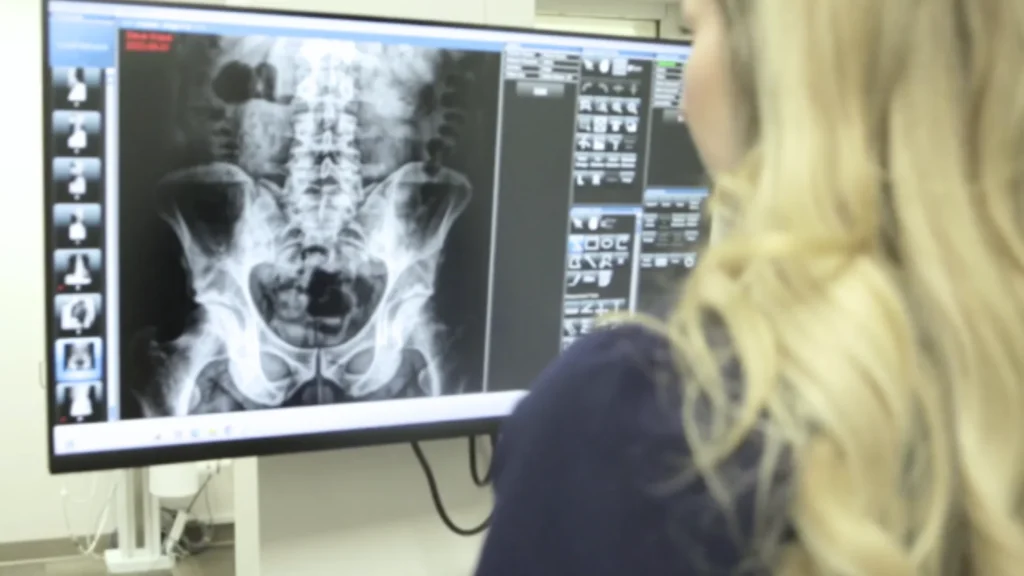
If you’re researching digital X-ray systems for a chiropractic practice, you’ve probably discovered that most imaging vendors design their products for hospitals, orthopedic groups, or multi-specialty medical clinics. Chiropractic offices have different needs. Beyond image acquisition, chiropractors often require biomechanical analysis tools, patient education features, documentation support, teleradiology access, and workflow systems designed specifically around spinal imaging.
This guide explains what matters most when evaluating a digital X-ray system, how the major technologies compare, and what features provide the greatest long-term value for chiropractic practices.
Why Digital X-Ray Matters in Chiropractic Practice
Radiography has been a cornerstone of chiropractic practice for more than a century and remains one of the most frequently utilized diagnostic procedures in the profession. A 2023 survey involving more than 4,300 licensed Doctors of Chiropractic found that 73.3% utilize spinal radiography in clinical practice. Among U.S. respondents, 91.9% believed radiography provides value beyond identifying pathology, 86.7% considered it important for biomechanical analysis, and 82.9% described it as vital to practice. These findings reinforce what many chiropractors already know: imaging serves a broader purpose than simply ruling out fractures or serious disease.
Digital imaging allows clinicians to evaluate spinal structure, assess biomechanical relationships, document objective findings, communicate diagnoses more effectively, and monitor clinically indicated changes over time. For practices involved in personal injury, workers’ compensation, or impairment evaluation, digital imaging can also provide important documentation support.
While some literature questions the value of routine, repetitive imaging without clinical indication, most chiropractors agree that radiography remains highly valuable when used appropriately and purposefully. The goal is not to image every patient. The goal is to obtain the right image at the right time and use it effectively within the diagnostic and documentation process.
Film, CR, and DR: Understanding the Technology
There are still three generations of imaging technology found in chiropractic offices today.
Film-Based Radiography
Traditional film systems require chemical processing, physical film storage, and manual retrieval. Although thousands of clinics continue to operate film systems, maintaining these systems becomes increasingly difficult as supplies, service, and processing equipment become less available.
Computed Radiography (CR)
Computed Radiography represented the first major step toward digital imaging. CR uses phosphor imaging plates housed within cassettes. Following exposure, the cassette must be inserted into a separate reader where the image is scanned and converted into a digital format.
Many early adopters transitioned from film to CR because it offered digital storage and improved workflow without requiring complete room replacement. However, CR still relies on physical cassette handling and an additional processing step before the image becomes available.
Digital Radiography (DR)
Digital Radiography, commonly called flat-panel imaging, captures images directly onto a digital detector without requiring a cassette reader. Images appear on screen within seconds and are immediately available for review, annotation, storage, and reporting.
Research consistently demonstrates that DR systems provide superior workflow efficiency and improved dose efficiency compared to CR systems. Studies evaluating detector performance report Detective Quantum Efficiency (DQE) values approximately twice as high in DR systems compared to CR systems, allowing comparable image quality at lower radiation doses.
Today, most new chiropractic installations utilize DR technology because of its speed, simplicity, and long-term efficiency advantages.
What Chiropractors Should Look For in a Digital X-Ray System
Not all digital imaging systems are created equal. Hardware matters, but software, workflow integration, and support often determine whether a system truly improves practice efficiency.
1. Chiropractic-Specific Measurement Tools
Most hospital-based imaging software was never designed for chiropractic workflows. Chiropractors frequently require measurements such as Cobb angles, Ferguson angles, pelvic analysis, spinal curvature assessment, George’s Line analysis, vertebral angle measurements, and other biomechanical evaluations.
A quality chiropractic imaging platform should provide these tools directly within the software rather than requiring multiple third-party applications.
2. Full-Spine Imaging Capability
Full-spine evaluation remains an important component of many chiropractic techniques and biomechanical assessments. Systems that support image stitching and seamless full-spine visualization can improve both clinical analysis and patient education.
3. Personal Injury Documentation Support
Practices involved in personal injury frequently require extensive documentation. Imaging software should facilitate objective measurements, detailed reporting, and integration with documentation workflows.
Particularly valuable are systems that support Alteration of Motion Segment Integrity (AOMSI) analysis and reporting when clinically indicated. Objective measurement tools can improve consistency and efficiency when documenting ligamentous injury and spinal instability findings.
4. Integrated Teleradiology Access
Many chiropractors interpret their own radiographs while also utilizing radiologist overreads for quality assurance, complex cases, or medicolegal documentation.
The most efficient systems integrate radiology submission directly into the imaging workflow rather than requiring separate uploads, portals, or external vendors. Rapid turnaround times and access to DACBR and medical radiologists can significantly improve office efficiency.
5. Cloud-Based Workflow and Data Security
Modern practices increasingly operate across multiple locations, remote workstations, and cloud-based environments.
Digital imaging systems should provide secure image storage, HIPAA-compliant backup systems, and convenient access to reports and images without requiring complex IT infrastructure.
6. Patient Communication Tools
One of the most overlooked advantages of digital imaging is patient education.
Patients often understand their condition more clearly when they can visualize their findings. Systems that allow image annotation, side-by-side comparisons, and secure image sharing can improve patient understanding, compliance, and case acceptance.
7. Integrated Workflow Design
Perhaps the most important consideration is workflow integration.
Many clinics unknowingly purchase separate systems for image acquisition, image storage, annotation, radiology reporting, cloud backup, patient communication, and documentation. While each component may function adequately on its own, managing multiple vendors often creates inefficiencies.
The most effective chiropractic imaging platforms combine these functions into a single ecosystem where image capture, analysis, reporting, storage, and consultation occur within one workflow.
The Evolution Toward Integrated Imaging Ecosystems
Digital X-ray technology has evolved far beyond simple image capture.
Today’s leading chiropractic imaging systems increasingly function as complete imaging ecosystems. Rather than focusing solely on hardware specifications, these systems integrate image acquisition, annotation, biomechanical analysis, cloud storage, patient communication, radiology consultation, and documentation support into a unified platform.
This integrated approach reduces administrative burden, improves consistency, minimizes training requirements, and helps clinicians spend more time treating patients rather than managing technology.
For many practices, the greatest efficiency gains come not from acquiring a faster detector, but from eliminating workflow friction throughout the entire imaging process.
How ChiroSight Approaches Chiropractic Imaging
ChiroSight was developed specifically around chiropractic workflows rather than adapting hospital-based radiology software. The platform combines digital imaging hardware, chiropractic-specific measurement tools, annotation software, cloud-based workflow capabilities, teleradiology integration, and personal injury documentation support within a single ecosystem.
ChiroSight has the highest rated customer service with live American and Canadian service personnel. Same day response usually immediate. More business and patient-centered features than any other competitor such as 20/20, Medical maven or Varex. ChiroSight has beneficial efficiency and patient education tools that these other competitors do not such as direct texting and email of images automated direct to the patient in a HIPAA compliant format. Additionally, ChiroSight has clear images and similar if not better image quality. Thirdly, the advanced AOMSI and Ligament Injury analysis reporting and automation of narrative reports places ChiroSight to the top of the list when comparing to other imaging systems. The software is simply the best. The price is less than the purchase cost of the others in apples to apples comparisons.
Features such as automated biomechanical measurements, full-spine stitching, integrated radiology reporting, patient image sharing, AOMSI reporting options, and DACBR teleradiology access reflect the growing demand for systems designed specifically for chiropractors rather than general medical imaging environments.
Whether a clinic chooses a full digital system or a retrofit upgrade, the emphasis remains on improving workflow efficiency while providing clinically meaningful tools that support diagnosis, documentation, patient education, and practice growth.
Full System Versus Retrofit: Which Makes More Sense?
If you already own an X-ray room and generator, a retrofit flat-panel solution may be the most cost-effective path to digital imaging. Retrofit systems often allow clinics to preserve existing infrastructure while gaining the advantages of modern digital workflow.
A full system typically makes more sense for new practices, major remodels, or clinics replacing aging equipment entirely.
The best choice depends on room configuration, equipment age, patient volume, and long-term practice goals.
Frequently Asked Questions
Is digital X-ray worth the investment for a small chiropractic practice?
For many practices, yes. Digital imaging reduces processing delays, minimizes retakes, improves workflow efficiency, and enhances patient communication. The return on investment depends largely on patient volume and utilization patterns.
Can chiropractors legally interpret their own radiographs?
In most jurisdictions, Doctors of Chiropractic receive extensive education in radiographic interpretation and are licensed to interpret spinal radiographs within their scope of practice. Many practices also utilize DACBR or medical radiologist overreads when additional consultation is desired.
What’s the difference between CR and DR?
CR requires a cassette and separate scanner. DR captures images directly onto a flat-panel detector and displays them within seconds. DR generally offers faster workflow, improved efficiency, and lower radiation exposure for equivalent image quality.
What is the most important factor when choosing a digital X-ray system?
Many chiropractors initially focus on detector specifications or purchase price. In reality, workflow integration, software functionality, documentation capabilities, support, and long-term usability often have a greater impact on daily practice efficiency than hardware specifications alone.
Sources
Arnone PA, Kraus SJ, Farmen D, et al. Examining Clinical Opinion and Experience Regarding Utilization of Plain Radiography of the Spine. Journal of Clinical Medicine. 2023.
An Investigation into the Chiropractic Practice and Communication of Routine Repetitive Radiographic Imaging. Journal of Clinical Imaging Science. 2024.
Computed Radiography (CR) and Digital Radiography (DR): Which Should You Choose?
Digital Radiography Versus Computed Radiography.